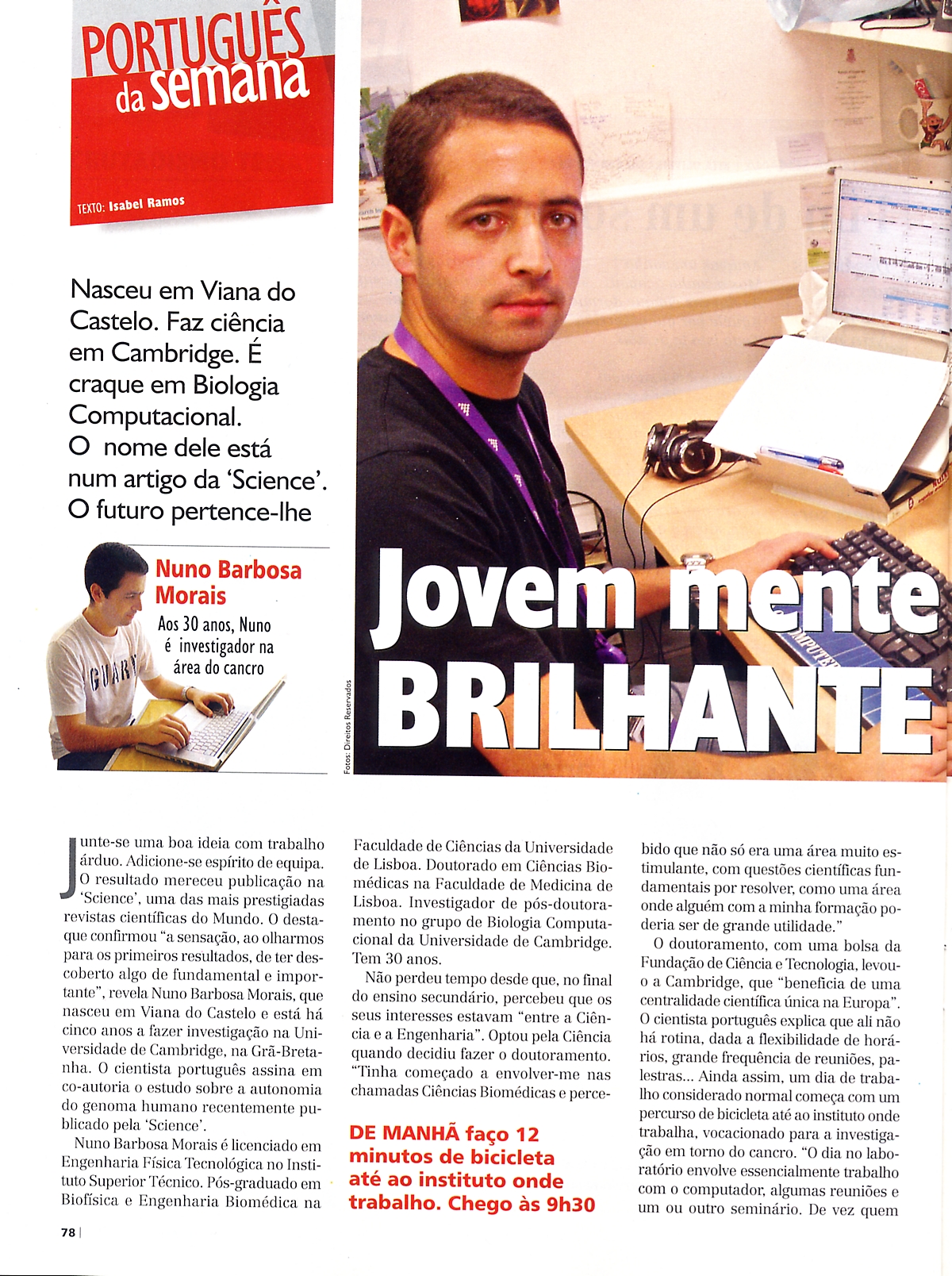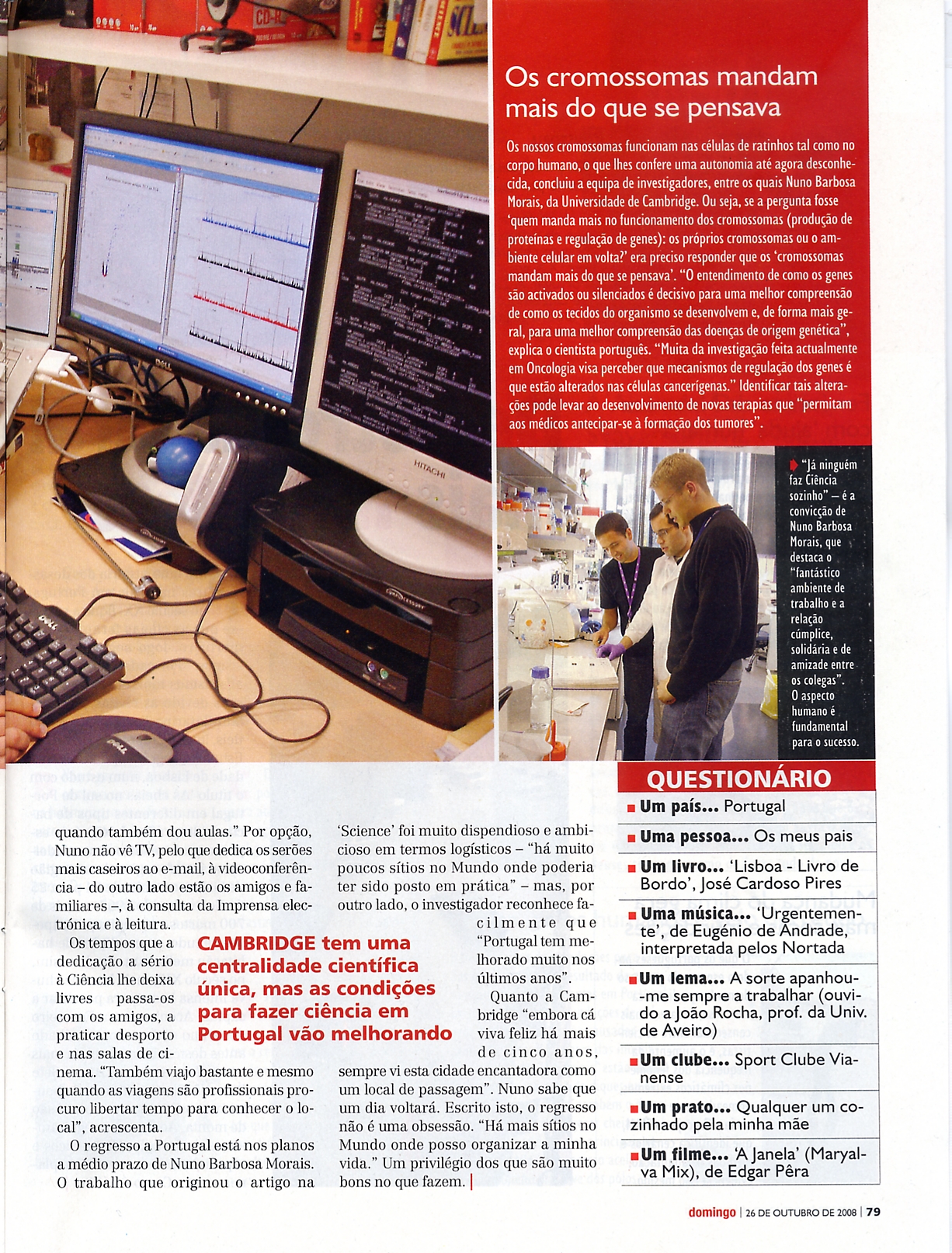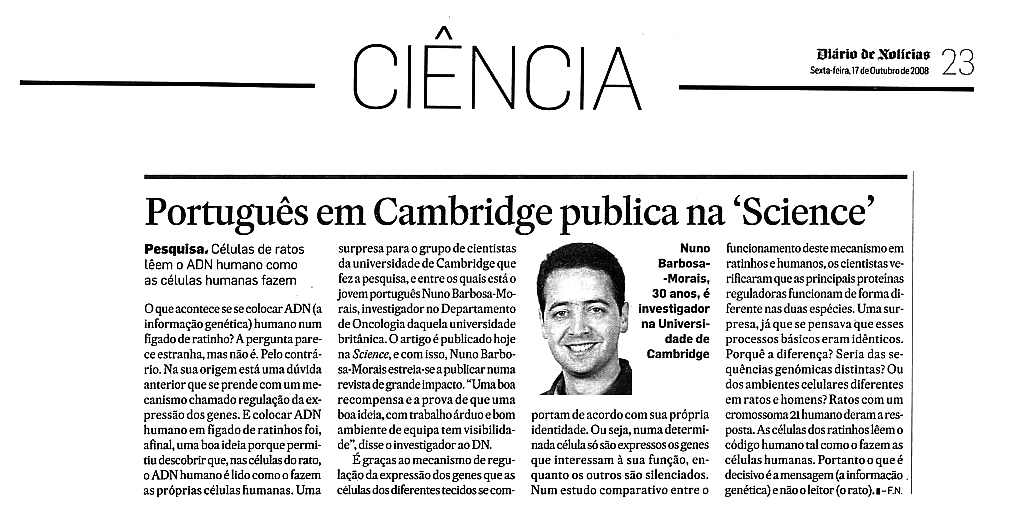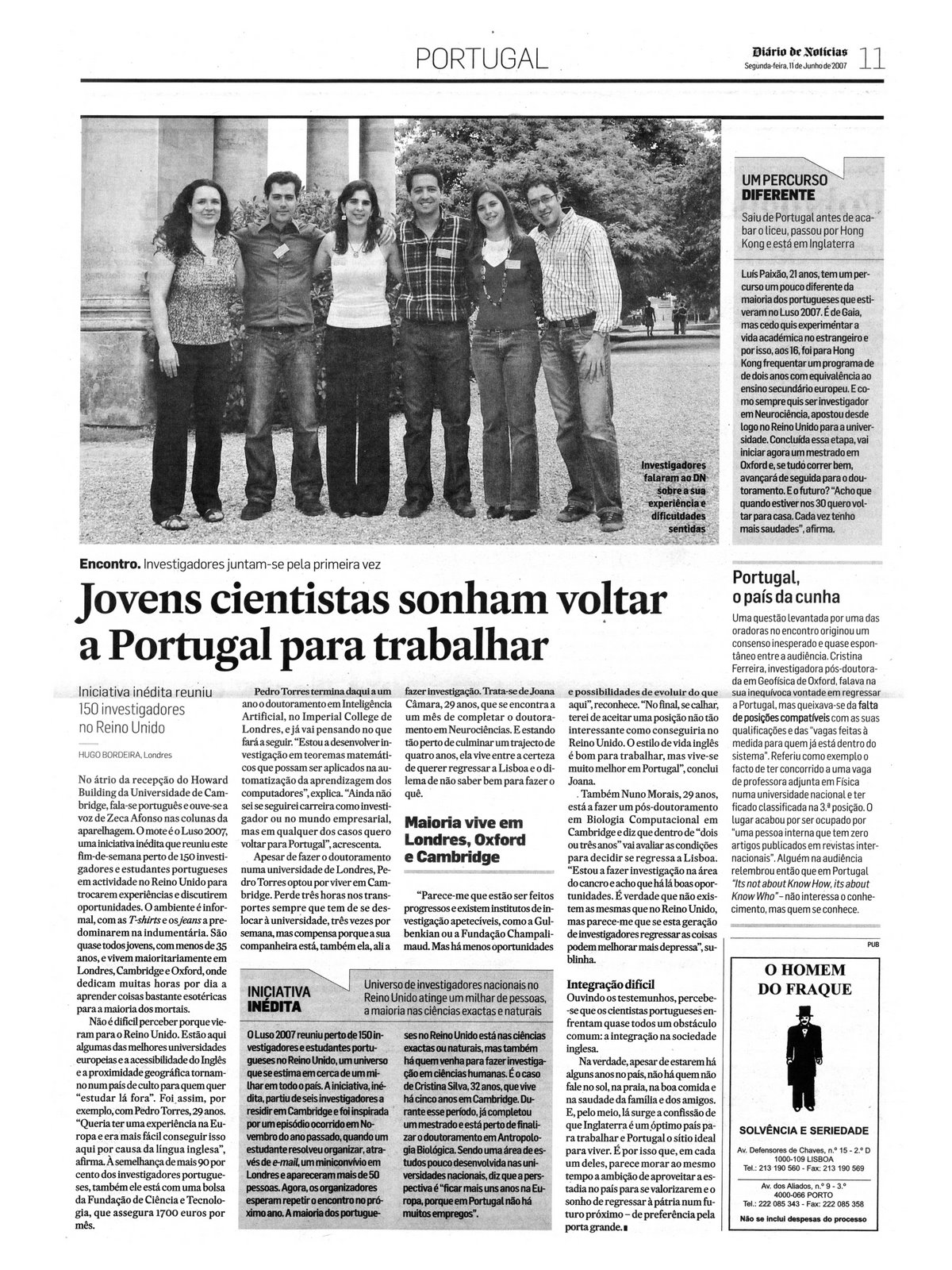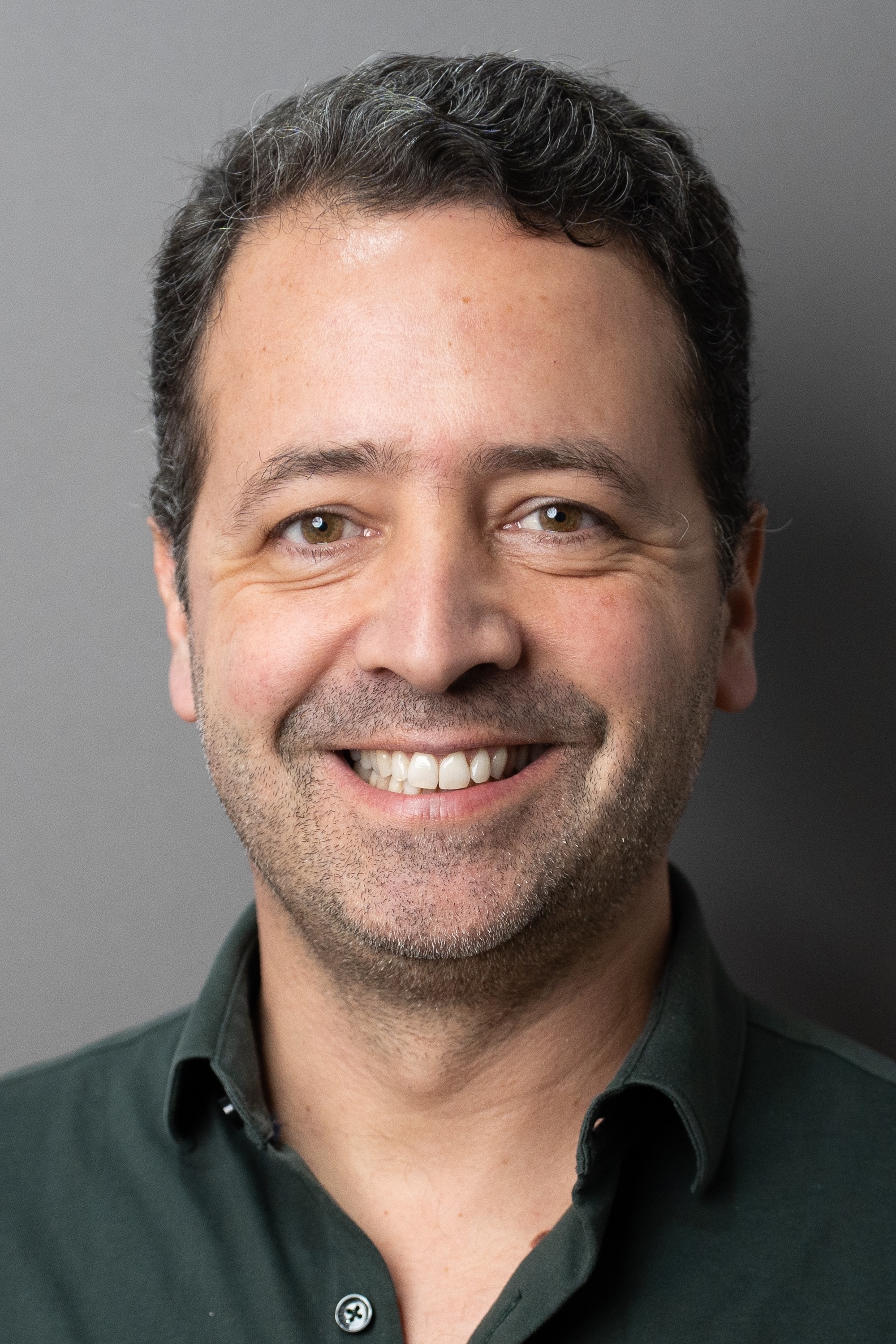
Nuno L. Barbosa-Morais
Disease Transcriptomics Lab · NOVA Medical School & GIMM, Lisbon
Research interests: Computational biology · Evolutionary medical genomics · RNA Biology · Biomedical data science methodology · Critical thinking
Nuno graduated in Technologic Physics Engineering from Instituto Superior Técnico (Lisbon, Portugal) in 2000. The research on cardiovascular variability associated with the degree's final project took place at the University of Lisbon Medical School, under the supervision of the late Professor Luis Silva Carvalho.
He completed a Graduate Program in Biophysics and Biomedical Engineering at IBEB, Faculty of Sciences of the University of Lisbon in 2001.
He then did his PhD in Biomedical Sciences at the Instituto de Medicina Molecular / University of Lisbon Medical School with Maria do Carmo Fonseca. Most of the PhD research took place at the University of Cambridge with Samuel Aparicio. He also visited the lab of Juan Valcárcel at EMBL Heidelberg for a few months in 2002. His PhD work involved bioinformatics studies on the complexity of splicing and gene expression, including studies on the evolution of splicing factors.
Nuno was a postdoctoral member of the Computational Biology Group at the University of Cambridge,
led by Simon Tavaré and based at the
CRUK Cambridge Research Institute,
from 2006 to July 2010. His main research was focused on understanding the complexity of gene
expression regulation and its impact on disease mechanisms, namely oncogenesis. He collaborated
with the Odom
Group in determining the molecular mechanisms responsible for the stability of
transcriptional programs by decoupling the
relative contributions of cistrans effects on
histone mark patterning, transcription factor binding, and gene
expression, as well as studying the regulation of
lineage-specific retrotransposons and repeat elements. Such work
involved the analysis, annotation and integration of different
sorts of array and sequence information.
He also contributed to the complete transcriptomic and genomic reannotation of Illumina BeadArray probe sequences, as the original annotation is shown to bias the interpretation of cancer data. This is part of a general pipeline for microarray probe reannotation. Nuno's efforts have also contributed for the development of several microarray-related methodologies.
In Cambridge, Nuno has also contributed with microarray annotation and sequence analysis for several cancer research studies.
Nuno joined the Blencowe Lab at the University of Toronto in August 2010, where he was involved in the analysis of mRNA-seq data for the inference of tissue- and species-specific alternative splicing patterns. He was awarded a Postdoctoral Fellowship from the Canadian Institutes of Health Research and a Marie Curie International Outgoing Fellowship.
Nuno moved in June 2013 to the iMM (now GIMM) for the return phase of his Marie Curie Fellowship. He was also, from October 2013 to April 2015, an Honorary Senior Research Fellow at the Nuffield Department of Obstetrics and Gynaecology of the University of Oxford.
He received an EMBO Installation Grant and an FCT Investigator Starting Grant, establishing his independent research group in early 2015 at the iMM (now GIMM), where he was based until 2025. In 2020, he was awarded a 6-year Assistant Researcher contract in FCT's Individual Call to Scientific Employment Stimulus.
Nuno was an Invited Associate Professor at the Faculty of Medicine, University of Lisbon from 2020 to 2025, where he taught Bioinformatics to Masters students in Biomedical Engineering, Oncobiology, and Biomedical Research.
He received the University of Lisbon / Caixa Geral de Depósitos 2024 Scientific Award in Biomedical Sciences. Since October 2024, he coordinates the Twinning project BIOMICS, funded by the European Union, aimed at "Fostering Excellent Research, Training and Innovation in Biomedical Data Science".
★ denotes key papers · (* co-first authors) · (+ corresponding author)
- Kaizeler A, Coutinho D, Vieira DV, Morais VA, Barbosa-Morais NL. "Revisiting Stress Granule Transcriptomes Suggests Mitochondrial RNA Enrichment Despite Methodological Bias." bioRxiv, 2026.09.08.749846.
- Marques D+, Fernandes C, Barbosa-Morais NL+, Reis C+. "Circadian disruption beneath the surface: a screening approach to identify actigraphy-based markers of split shift work in submariners." bioRxiv, 2025.06.16.659930.
- Bica M+, Serre K, Barbosa-Morais NL+. "scStudio: A User-Friendly Web Application Empowering Non-Computational Users with Intuitive scRNA-seq Data Analysis." bioRxiv, 2025.04.17.649161.
- Moreno-Marin N, Marteil G, Fresmann NC, de Almeida BP, Dores K, Fragoso R, Cardoso J, Pereira-Leal JB, Barata JT, Godinho S, Barbosa-Morais NL, Bettencourt-Dias M. "High prevalence and dependence of centrosome clustering in mesenchymal tumors and leukemia." bioRxiv, 2023.03.13.532472.
- [65] Martins-Silva R+, Kaizeler A, Barbosa-Morais NL+. "Exploring molecular signatures of senescence with markeR, an R toolkit for evaluating gene sets as phenotypic markers." NAR Genomics and Bioinformatics, 2026 Jun 8;8(2):lqag057. [PubMed]
- [64] Soares MVD, Gómez VE, Azevedo RI, Pereira PNG, Velázquez TC, Mendes L, Alho AC, García-Guerrero E, Garcia-Calderón CB, Tharmaratnam K, Cabral IA, Ribeiro AC, Juncal C, Roncon S, Pais AT, Gil AR, Espada E, Rodrigues A, Garção A, Yaspo ML, Warnatz HJ, Lehrach H, Ward L, Barbosa-Morais NL, Quintas AM, Palmela P, Caldas C, Ferreira R, Leite L, Martins C, Lourenço F, Moreno R, Campilho F, Cheyne CP, Garcia-Fiñana M, Campos A, Baron F, Arpinati M, Hoffmann P, Edinger M, Koreth J, Ritz J, Vaz CP, Perez-Simon JA, Lacerda JF. "Phase 1/2 trials of donor regulatory T cells for the treatment of steroid-refractory chronic graft-versus-host disease." Blood Advances, 2026 May 12;10(9):2904-2915. [PubMed]
- [63] Wagner V, Bousset L, Ascensão-Ferreira M, Sun B, Barragan Avila JE, Kaizeler A, Martins-Silva R, Rahbari M, Fernández-Vaquero M, Haston S, Tinti M, Pombo J, Khadayate S, Roth S, Schürch CM, Martínez-Barbera JP, Bahat A, Wee KB, Morton JP, Malek N, Innes AJ, Vernia S, Barbosa-Morais NL, Gallage S, Heikenwalder M, Gil J. "Spliceosome induction is a druggable dependency of RAS-driven senescence and cancer." Nature Communications, 2026 Apr 15;17(1):5208. [PubMed]
- [62] Jardim C*, Bica M*, Reis-Sobreiro M, da Mota AT, Lopes R, Pinto M, Sousa NS, Mensurado S, Boekhoff H, Scolaro T, Reugebrink M, Gonçalves-Sousa N, Kubo H, Gomes CM, Brito C, Arguello R, Leites EP, Morais VA, Silva-Santos B, Barbosa-Morais NL+, Serre K+. "Sustained macrophage reprogramming is required for CD8 T cell-dependent long-term tumor eradication." Cancer Immunology Research, 2025 Aug 1;13(8):1207-1225. [PubMed]
- [61] Sousa NS, Bica M, Bras MF, Antunes IB, Encarnacao IA, Costa T, Martins IB, Barbosa-Morais NL, Sousa-Victor P, Neves J. "The immune landscape of murine skeletal muscle regeneration and aging." Cell Reports, 2024 Nov 26;43(11):114975. [PubMed]
- [60] Schneider AL*, Martins-Silva R*, Kaizeler A*, Saraiva-Agostinho N, Barbosa-Morais NL+. "voyAGEr, free web interface for the analysis of age-related gene expression alterations in human tissues." eLife, 2024;12:RP88623. [PubMed]
- [59] Ascensão-Ferreira M*, Martins-Silva R*, Saraiva-Agostinho N, Barbosa-Morais NL+. "betAS: intuitive analysis and visualisation of differential alternative splicing using beta distributions." RNA, 2024;30(4):337-353. [PubMed]
- [58] Martins I, Neves-Silva D, Ascensão-Ferreira M, Dias AF, Ribeiro D, Isidro AF, Quiteria R, Paramos-de-Carvalho D, Barbosa-Morais NL, Saude L. "Mouse Spinal Cord Vascular Transcriptome Analysis Identifies CD9 and MYLIP as Injury-Induced Players." Int J Mol Sci, 2023;24(7):6433. [PubMed]
- [57] Goulielmaki E, Tsekrekou M, Batsiotos N, Ascensão-Ferreira M, Ledaki E, Stratigi K, Chatzinikolaou G, Topalis P, Kosteas T, Altmüller J, Demmers JA, Barbosa-Morais NL, Garinis GA. "The splicing factor XAB2 interacts with ERCC1-XPF and XPG for R-loop processing." Nature Communications, 2021 May 26;12(1):3153. [PubMed]
- [56] Conde J, Pumroy RA, Baker C, Rodrigues T, Guerreiro A, Sousa BB, Marques MC, de Almeida BP, Lee S, Leites EP, Picard D, Samanta A, Vaz SH, Sieglitz F, Langini M, Remke M, Roque R, Weiss T, Weller M, Liu Y, Han S, Corzana F, Morais VA, Faria CC, Carvalho T, Filippakopoulos P, Snijder B, Barbosa-Morais NL, Moiseenkova-Bell VY, Bernardes GJL. "Allosteric Antagonist Modulation of TRPV2 by Piperlongumine Impairs Glioblastoma Progression." ACS Central Science, 2021;7(5):868-881. [PubMed]
- [55] Bordone MC, Barbosa-Morais NL+. "Unraveling Targetable Systemic and Cell-Type-Specific Molecular Phenotypes of Alzheimer's and Parkinson's Brains With Digital Cytometry." Frontiers in Neuroscience, 2020 Dec 9;14:607215. [PubMed]
- [54] Rathore OS, Silva RD, Ascensão-Ferreira M, Matos R, Carvalho C, Marques B, Tiago MN, Prudencio P, Andrade RP, Roignant JY, Barbosa-Morais NL+, Martinho RG+. "NineTeen Complex-subunit Salsa is required for efficient splicing of a subset of introns and dorsal-ventral patterning." RNA, 2020 Dec;26(12):1935-1956. [PubMed]
- [53] Gomes I, de Almeida BP, Dâmaso S, Mansinho A, Correia I, Henriques S, Cruz-Duarte R, Vilhais G, Félix P, Alves P, Corredeira P, Barbosa-Morais NL, Costa L, Casimiro S. "Expression of receptor activator of NFkB (RANK) drives stemness and resistance to therapy in ER+HER2- breast cancer." Oncotarget, 2020;11(19):1714-1728. [PubMed]
- [52] Santos AF, Barbosa-Morais NL, Hurlburt BK, Ramaswamy S, Hemmings O, Kwok M, O'Rourke C, Bahnson HT, Cheng H, James L, Gould HJ, Sutton BJ, Maleki SJ, Lack G. "IgE to epitopes of Ara h 2 enhance the diagnostic accuracy of Ara h 2-specific IgE." Allergy, 2020 Sep;75(9):2309-2318. [PubMed]
- [51] Saraiva-Agostinho N+, Barbosa-Morais NL+. "Interactive Alternative Splicing Analysis of Human Stem Cells Using psichomics." Methods in Molecular Biology, 2020;2117:179-205. [PubMed]
- [50] Godinho-Silva C, Domingues RG, Rendas M, Raposo B, Ribeiro H, da Silva JA, Vieira A, Costa RM, Barbosa-Morais NL, Carvalho T, Veiga-Fernandes H. "Light-entrained and brain-tuned circadian circuits regulate ILC3s and gut homeostasis." Nature, 2019 Oct;574(7777):254-258. [PubMed]
- [49] Munkley J, Li L, Krishnan SRG, Hysenaj G, Scott E, Dalgliesh C, Oo HZ, Maia TM, Cheung K, Ehrmann I, Livermore KE, Zielinska H, Thompson O, Knight B, McCullagh P, McGrath J, Crundwell M, Harries LW, Daugaard M, Cockell S, Barbosa-Morais NL+, Oltean S+, Elliott DJ+. "Androgen-regulated transcription of ESRP2 drives alternative splicing patterns in prostate cancer." eLife, 2019 Sep 3;8:e47678. [PubMed]
- [48] Rodrigues T, de Almeida BP, Barbosa-Morais NL, Bernardes GJL. "Dissecting celastrol with machine learning to unveil dark pharmacology." Chem Commun (Camb), 2019 May 30;55(45):6369-6372. [PubMed]
- [47] Baker C, Rodrigues T, de Almeida BP, Barbosa-Morais NL, Bernardes GJL. "Natural product-drug conjugates for modulation of TRPV1-expressing tumors." Bioorg Med Chem, 2019 Jun 15;27(12):2531-2536. [PubMed]
- [46] de Almeida BP, Vieira AF, Paredes J, Bettencourt-Dias M, Barbosa-Morais NL+. "Pan-cancer association of a centrosome amplification gene expression signature with genomic alterations and clinical outcome." PLoS Computational Biology, 2019 Mar 11;15(3):e1006832. [PubMed]
- [45] Saraiva-Agostinho N+, Barbosa-Morais NL+. "psichomics: graphical application for alternative splicing quantification and analysis." Nucleic Acids Research, 2019 Jan 25;47(2):e7. [PubMed]
- [44] Braun S, Enculescu M, Setty S, Cortés-López M, de Almeida B, Sutandy FXR, Schulz L, Busch A, Seiler M, Ebersberger S, Barbosa-Morais NL, Legewie S, König J, Zarnack K. "Decoding a cancer-relevant splicing decision in the RON proto-oncogene using high-throughput mutagenesis." Nature Communications, 2018 Aug 17;9(1):3315. [PubMed]
- [43] Munkley J, Maia TM, Ibarluzea N, Livermore KE, Vodak D, Ehrmann I, James K, Rajan P, Barbosa-Morais NL, Elliott DJ. "Androgen-dependent alternative mRNA isoform expression in prostate cancer cells." F1000Res, 2018 Aug 3;7:1189. [PubMed]
- [42] Georgilis A, Klotz S, Hanley CJ, Herranz N, Weirich B, Morancho B, Leote AC, D'Artista L, Gallage S, Seehawer M, Carroll T, Dharmalingam G, Wee KB, Mellone M, Pombo J, Heide D, Guccione E, Arribas J, Barbosa-Morais NL, Heikenwalder M, Thomas GJ, Zender L, Gil J. "PTBP1-Mediated Alternative Splicing Regulates the Inflammatory Secretome and the Pro-tumorigenic Effects of Senescent Cells." Cancer Cell, 2018 Jul 9;34(1):85-102.e9. [PubMed]
- [41] Leznicki P, Natarajan J, Bader G, Spevak W, Schlattl A, Rehman SAA, Pathak D, Weidlich S, Zoephel A, Bordone MC, Barbosa-Morais NL, Boehmelt G, Kulathu Y. "Expansion of DUB functionality by alternative isoforms: USP35, a case study." J Cell Sci, 2018 May 16;131(10):jcs212753. [PubMed]
- [40] Marteil G, Guerrero A, Vieira AF, de Almeida BP, Machado P, Mendonça S, Mesquita M, Villarreal B, Fonseca I, Francia ME, Dores K, Martins NP, Jana SC, Tranfield EM, Barbosa-Morais NL, Paredes J, Pellman D, Godinho SA, Bettencourt-Dias M. "Over-elongation of centrioles in cancer promotes centriole amplification and chromosome missegregation." Nature Communications, 2018 Mar 28;9(1):1258. [PubMed]
- [39] Cardoso V, Chesné J, Ribeiro H, García-Cassani B, Carvalho T, Bouchery T, Shah K, Barbosa-Morais NL, Harris N, Veiga-Fernandes H. "Neuronal regulation of type 2 innate lymphoid cells via neuromedin U." Nature, 2017 Sep 14;549(7671):277-281. [PubMed]
- [38] Gallego-Paez LM, Bordone MC, Leote AC, Saraiva-Agostinho N, Ascensão-Ferreira M, Barbosa-Morais NL+. "Alternative splicing: the pledge, the turn, and the prestige - The key role of alternative splicing in human biological systems." Human Genetics, 2017 Sep;136(9):1015-1042. [PubMed]
- [37] Rijo-Ferreira F, Pinto-Neves D, Barbosa-Morais NL, Takahashi JS, Figueiredo LM. "Trypanosoma brucei metabolism is under circadian control." Nature Microbiology, 2017 Mar 13;2:17032. [PubMed]
- [36] Liu Y, Noon AP, Cabeza EA, Shen J, Kuk C, Ilczynski C, Ni R, Sukhu B, Chan K, Barbosa-Morais NL, Hermanns T, Blencowe BJ, Azad A, van der Kwast TH, Catto JWF, Zlotta AR, Wrana JL. "Next generation RNA sequencing of archival formalin fixed paraffin embedded urothelial bladder cancer." European Urology, 2014 Dec;66(6):982-6. [PubMed]
- [35] Braunschweig U, Barbosa-Morais NL, Pan Q, Nachman EN, Alipahani B, Gonatopoulos-Pournatzis T, Frey B, Irimia M, Blencowe BJ. "Widespread intron retention in mammals functionally tunes transcriptomes." Genome Research, 2014 Nov;24(11):1774-86. [PubMed]
- [34] Pena AC, Pimentel MR, Manso H, Vaz-Drago R, Neves D, Aresta-Branco F, Ferreira FR, Guegan F, Coelho LP, Carmo-Fonseca M, Barbosa-Morais NL, Figueiredo LM. "Trypanosoma brucei histone H1 inhibits RNA polymerase I transcription and is important for parasite fitness in vivo." Molecular Microbiology, 2014 Aug;93(4):645-63. [PubMed]
- [33] Han H, Irimia M, Ross PJ, Sung HK, Alipanahi B, David L, Golipour A, Gabut M, Michael IP, Nachman EN, Wang E, Trcka D, Thompson T, O'Hanlon D, Slobodeniuc V, Barbosa-Morais NL, Burge CB, Moffat J, Frey BJ, Nagy A, Ellis J, Wrana JL, Blencowe BJ. "MBNL proteins repress ES-cell-specific alternative splicing and reprogramming." Nature, 2013 Jun 13;498(7453):241-5. [PubMed]
- [32] Ward MC, Wilson MD, Barbosa-Morais NL, Schmidt D, Stark R, Pan Q, Schwalie PC, Menon S, Lukk M, Watt S, Thybert D, Kutter C, Kirschner K, Flicek P, Blencowe BJ, Odom DT. "Latent Regulatory Potential of Human-Specific Repetitive Elements." Molecular Cell, 2013 Jan 24;49(2):262-72. [PubMed]
- [31] Barbosa-Morais NL, Irimia M, Pan Q, Xiong HY, Gueroussov S, Lee LJ, Slobodeniuc V, Kutter C, Watt S, Colak R, Kim T, Misquitta-Ali CM, Wilson MD, Kim PM, Odom DT, Frey BJ, Blencowe BJ. "The evolutionary landscape of alternative splicing in vertebrate species." Science, 2012 Dec 21;338(6114):1587-93. [PubMed]
- [30] Muralidhar B, Winder D, Murray M, Palmer R, Barbosa-Morais N, Saini H, Roberts I, Pett M, Coleman N. "Functional evidence that Drosha overexpression in cervical squamous cell carcinoma affects cell phenotype and microRNA profiles." J Pathol, 2011 Aug;224(4):496-507. [PubMed]
- [29] Ahmed AA, Lu Z, Jennings NB et al., Barbosa-Morais N, et al. "SIK2 is a centrosome kinase required for bipolar mitotic spindle formation that provides a potential target for therapy in ovarian cancer." Cancer Cell, 2010 Aug 9;18(2):109-21. [PubMed]
- [28] Dunning MJ, Curtis C, Barbosa-Morais NL, Caldas C, Tavaré S, Lynch AG. "The importance of platform annotation in interpreting microarray data." Lancet Oncology, 2010 Aug;11(8):717. [PubMed]
- [27] Barbosa-Morais NL+, Dunning MJ, Samarajiwa SA, Darot JFJ, Ritchie ME, Lynch AG, Tavaré S. "A re-annotation pipeline for Illumina BeadArrays: improving the interpretation of gene expression data." Nucleic Acids Research, 2010 Jan 1;38(3):e17. [PubMed]
- [26] Lynch AG, Dunning MJ, Iddawela M, Barbosa-Morais NL, Ritchie ME. "Considerations for the processing and analysis of GoldenGate-based two-colour Illumina platforms." Statistical Methods in Medical Research, 2009 Oct;18(5):437-52. [PubMed]
- [25] White V, Scarpini C, Barbosa-Morais NL, Ikele E, Carter S, Laskey RA, Miller R, Coleman N. "Isolation of stool-derived mucus provides a high yield of colocytes suitable for early detection of colorectal carcinoma." Cancer Epidemiology, Biomarkers & Prevention, 2009 Jul;18(7):2006-13. [PubMed]
- [24] Dunning AM, Healey CS, Baynes C, Maia AT, Scollen S, Vega A, Rodríguez R, Barbosa-Morais NL, Ponder BAJ, et al. "Association of ESR1 gene tagging SNPs with breast cancer risk." Human Molecular Genetics, 2009 Mar 15;18(6):1131-9. [PubMed]
- [23] Wilson MD*, Barbosa-Morais NL*, Schmidt D, Conboy CM, Vanes L, Tybulewicz VLJ, Fisher EMC, Tavaré S, Odom DT. "Species-specific transcription in mice carrying human chromosome 21." Science, 2008 Oct 17;322(5900):434-8. [PubMed]
- [22] Grosso AR, Gomes AQ, Barbosa-Morais NL, Caldeira S, Thorne NP, Grech G, von Lindern M, Carmo-Fonseca M. "Tissue-specific splicing factor gene expression signatures." Nucleic Acids Research, 2008 Sep;36(15):4823-32. [PubMed]
- [21] Dunning MJ, Ritchie ME, Barbosa-Morais NL, Tavaré S, Lynch AG. "A first spike-in validation of the Illumina specific Variance-Stabilizing Transformation." BMC Research Notes, 2008;1:18. [PubMed]
- [20] Palmer RD, Barbosa-Morais NL, Gooding EL, Muralidhar B, Thornton CM, Pett MR, Roberts I, Schneider DT, Thorne N, Tavaré S, Nicholson JC, Coleman N. "Pediatric malignant germ cell tumours show characteristic transcriptome profiles." Cancer Research, 2008 Jun 1;68(11):4239-47. [PubMed]
- [19] Dunning MJ, Barbosa-Morais NL, Lynch AG, Tavaré S, Ritchie ME. "Statistical issues in the analysis of Illumina data." BMC Bioinformatics, 2008 Feb 6;9(1):85. [PubMed]
- [18] Driver K, Song S, Lesueur F, Ahmed S, Barbosa-Morais NL, Tyrer J, Ponder BAJ, Easton DF, Pharoah PDP, Dunning AM, for the SEARCH Team. "Association of single-nucleotide polymorphisms in the Cell Cycle genes with breast cancer in the British population." Carcinogenesis, 2008 Feb;29(2):333-41. [PubMed]
- [17] Conboy CM, Spyrou C, Thorne NP, Wade EJ, Barbosa-Morais NL, Bhattacharjee A, Young RA, Tavaré S, Lees JA, Odom DT. "Cell cycle genes are the evolutionarily conserved targets of mammalian DREAM member E2F4." PLoS ONE, 2007 Oct 24;2(10):e1061. [PubMed]
- [16] Chin SF, Teschendorff AE, Marioni JC, Wang Y, Barbosa-Morais NL, Thorne NP, Costa J, Pinder SE, van de Wiel MA, Green AR, Ellis IO, Porter PL, Tavaré S, Brenton JD, Ylstra B, Caldas C. "High-resolution array-CGH and expression profiling identifies a novel genomic subtype of ER negative breast cancer." Genome Biology, 2007 Oct 9;8(10):R215. [PubMed]
- [15] Blenkiron C, Goldstein LD, Thorne NP, Spiteri MI, Chin SF, Dunning M, Barbosa-Morais NL, Tavaré S, Caldas C, Miska EA. "MicroRNA expression profiling of human breast cancer identifies new markers of tumour subtype." Genome Biology, 2007 Oct 8;8(10):R214. [PubMed]
- [14] Massie CE, Adryan B, Barbosa-Morais NL, Lynch AG, Tran M, Neal DE, Mills IG. "New Androgen Receptor genomic targets reveal an interaction with the ETS1 transcription factor." EMBO Reports, 2007 Sep;8(9):871-8. [PubMed]
- [13] Muralidhar B, Goldstein LD, Ng G, Winder DM, Palmer RD, Gooding EL, Barbosa-Morais NL, Mukherjee G, Thorne NP, Roberts I, Pett MR, Coleman N. "Global microRNA profiles in cervical squamous cell carcinoma depend on Drosha expression levels." J Pathol, 2007 Aug;212(4):368-77. [PubMed]
- [12] Chin SF, Wang Y, Thorne NP, Teschendorff AE, Pinder SE, Vias M, Naderi A, Roberts I, Barbosa-Morais NL, Garcia MJ, Iyer NG, Kranjac T, Robertson JF, Aparicio S, Tavaré S, Ellis I, Brenton JD, Caldas C. "Using array-comparative genomic hybridization to define molecular portraits of primary breast cancers." Oncogene, 2007 Mar 22;26(13):1959-70. [PubMed]
- [11] Naderi A, Teschendorff AE, Barbosa-Morais NL, Pinder SE, Green AR, Powe DG, Robertson JF, Aparicio S, Ellis IO, Brenton JD, Caldas C. "A gene-expression signature to predict survival in breast cancer across independent data sets." Oncogene, 2007 Mar 1;26(10):1507-16. [PubMed]
- [10] Mollet I, Barbosa-Morais NL, Andrade J, Carmo-Fonseca M. "Diversity of human U2AF splicing factors." FEBS J, 2006 Nov;273(21):4807-16. [PubMed]
- [9] Teschendorff AE, Naderi A, Barbosa-Morais NL, Caldas C. "PACK: Profile Analysis using Clustering and Kurtosis to find molecular classifiers in cancer." Bioinformatics, 2006 Sep 15;22(18):2269-75. [PubMed]
- [8] Gama-Carvalho M, Barbosa-Morais NL, Brodsky AS, Silver PA, Carmo-Fonseca M. "Genome-wide identification of functionally distinct subsets of cellular mRNAs associated with two nucleocytoplasmic-shuttling mammalian splicing factors." Genome Biology, 2006;7(11):R113. [PubMed]
- [7] Teschendorff AE, Naderi A, Barbosa-Morais NL, Pinder SE, Ellis IO, Aparicio S, Brenton JD, Caldas C. "A consensus prognostic gene expression classifier for ER positive breast cancer." Genome Biology, 2006;7(10):R101. [PubMed]
- [6] Barbosa-Morais NL, Carmo-Fonseca M, Aparicio S. "Systematic genome-wide annotation of spliceosomal proteins reveals differential gene family expansion." Genome Research, 2006 Jan;16(1):66-77. [PubMed]
- [5] Ibrahim AEK, Thorne NP, Baird K, Barbosa-Morais NL, Tavaré S, Collins VP, Wyllie AH, Arends MJ, Brenton JD. "MMASS: an optimized array-based method for assessing CpG island methylation." Nucleic Acids Research, 2006;34(20):e136. [PubMed]
- [4] Stamm S, Riethoven JJ, Le Texier V, Gopalakrishnan C, Kumanduri V, Tang Y, Barbosa-Morais NL, Thanaraj TA. "ASD: a bioinformatics resource on alternative splicing." Nucleic Acids Research, 2006 Jan 1;34(Database issue):D46-55. [PubMed]
- [3] Teschendorff AE, Wang Y, Barbosa-Morais NL, Brenton JD, Caldas C. "A variational Bayesian mixture modelling framework for cluster analysis of gene-expression data." Bioinformatics, 2005 Jul 1;21(13):3025-33. [PubMed]
- [2] Pacheco TR, Gomes AQ, Barbosa-Morais NL, Benes V, Ansorge W, Wollerton M, Smith CW, Valcárcel J, Carmo-Fonseca M. "Diversity of vertebrate splicing factor U2AF35: identification of alternatively spliced U2AF1 mRNAs." J Biol Chem, 2004 Jun 25;279(26):27039-49. [PubMed]
- [1] Naderi A, Ahmed AA, Barbosa-Morais NL, Aparicio S, Brenton JD, Caldas C. "Expression microarray reproducibility is improved by optimising purification steps in RNA amplification and labelling." BMC Genomics, 2004 Jan 30;5(1):9. [PubMed]
- Saraiva-Agostinho N, Barbosa-Morais NL. "Interactive Alternative Splicing Analysis of Human Stem Cells Using psichomics." In: Kidder B. (eds), Stem Cell Transcriptional Networks. Methods in Molecular Biology, vol 2117, 2020 pp 179-205. [PubMed]
- Lynch AG, Smith ML, Dunning MJ, Cairns JM, Barbosa-Morais NL, Tavaré S. "beadarray, BASH and HULK - tools to increase the value of Illumina BeadArray experiments." In Statistical Tools for Challenges in Bioinformatics, 2009 pp 33-37. Leeds University Press.
- Barbosa-Morais NL (2007). "Bioinformatics Studies on the Complexity of Splicing and Gene Expression." Faculdade de Medicina, Universidade de Lisboa.
About Critical Thinking
About the Telomere-to-Telomere complete human genome sequence
About the title of Citizen of Merit (Viana do Castelo)
About RNA and vaccines
About the 2019 PLoS Computational Biology paper ("Pan-cancer association of a centrosome amplification gene expression signature with genomic alterations and clinical outcome")
- Investigadores portugueses criam novo método para definir agressividade de cancros - also covered by RTP, TSF
- When a cell's 'fingerprint' can be a weapon against cancer - also covered internationally by InfoSalus (ES), ANSA (IT), il Fatto Quotidiano (IT)